The Spiderweb of Doom: A Familiar Tale
Right then, pop the kettle on and settle in. I want you to picture a scenario—one I suspect many of you know all too well.
You’re rushing for the Tube, or perhaps juggling a piping hot takeaway coffee and your brolly in the rain. Then, it happens. The slip. The fumble. The heart-stopping clatter of glass meeting pavement.
You pick it up, turning it over with the sort of dread usually reserved for checking your bank balance after a holiday. And there it is: the spiderweb of doom. Your beautiful, pristine display is now a mosaic of sharp shards.
Now, here comes the dilemma. You march down to the manufacturer’s shiny flagship store, and they quote you a price that makes your eyes water—something akin to the GDP of a small nation. But then, you remember the little shop down the high street—you know the one, nestled between the kebab shop and the newsagents—offering to fix it for a fraction of the cost.
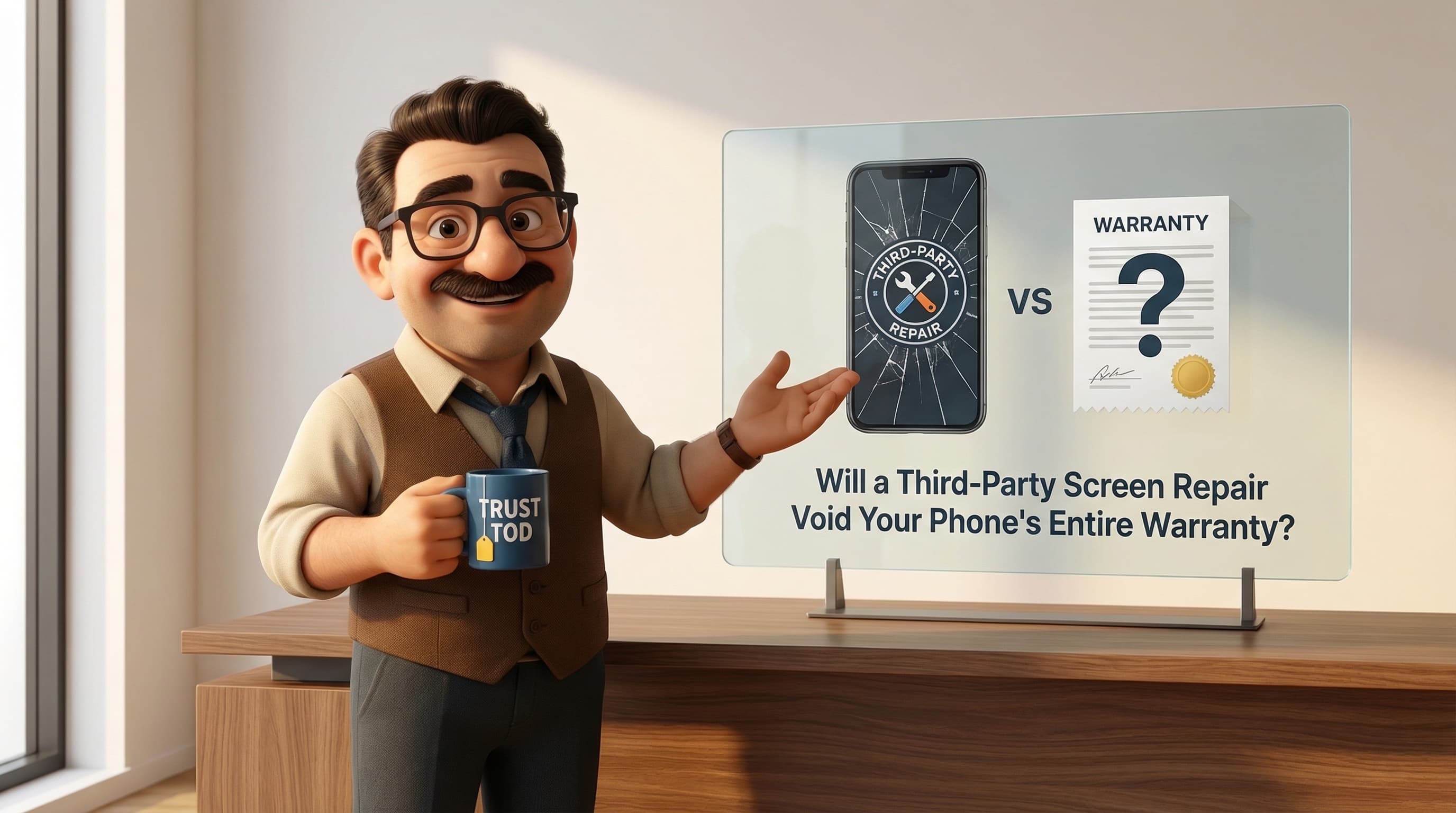
But a little voice in your head whispers a warning: "If you let that chap fix it, you’ll void your warranty entirely. If your battery dies next week, you’re on your own."
It’s a terrifying thought, isn’t it? The idea that one unauthorized screw-turn renders your expensive device completely unsupportable. But is it actually true? Or is it a load of old cobblers designed to keep us paying premium prices?
I’ve done some digging, consulted the legal jargon, and I’m here to spill the tea. Let’s get to the bottom of this.
The Myth: The "All or Nothing" Fear
So, where did this pervasive belief come from? It didn’t just appear out of thin air like a magician’s rabbit. It’s been drilled into us by the manufacturers themselves.
For over a decade, the Terms & Conditions (T&Cs) tucked inside those little booklets we all throw away have been explicitly clear. Giants like Apple, Samsung, and Sony have historically included clauses stating that any "unauthorised modification," "tampering," or repair by a non-certified human would render the warranty null and void.
The myth is essentially this: The moment a third-party screwdriver touches your phone, the manufacturer washes their hands of you forever.
It sounds plausible, right? It’s their tech, their rules. But like many myths, while it’s rooted in a nugget of truth, the modern reality is far more nuanced—and far more favourable to us Brits than you might think.
A Trip Down Memory Lane: When the Myth Was Fact
To be fair to the tech giants, this policy wasn’t always just about being difficult. If we rewind to the early days of smartphones (roughly 2007–2015), devices were incredibly sensitive, integrated bits of kit.
Back then, phones were constructed with those infamous "Void if Removed" stickers covering screw holes. If a technician at a service centre saw that seal broken, they were instructed to deny service immediately. No questions asked.
From an engineering perspective, it made sense. Early smartphones were less modular. A clumsy repair on a screen could easily short-circuit the motherboard or puncture a battery (a fiery hazard nobody wants in their pocket). Manufacturers argued—quite rightly at the time—that they couldn't be held liable for a device's failure if they couldn't verify the integrity of the parts inside.
They also wanted to maintain a "walled garden." The philosophy was total control over the user experience. If you went outside the garden walls, you were on your own in the wilderness.
The Truth: How Tech (and the Law) Changed
Fast forward to today, and the landscape has shifted dramatically. There are two main sides to this: the technical reality and the legal safety net we enjoy here in the UK.
1. The Engineering Reality
Technically speaking, modern smartphones are essentially Lego sets for grown-ups. They are collections of modular components connected to a main logic board. Replacing the display assembly (the screen and digitiser) is an isolated event.
Changing a screen does not biologically alter the battery, the charging port, or the software logic, provided the repair is performed correctly. If you replace the tyres on your car with a budget brand, Ford doesn't turn around and say your engine warranty is void. The same logic applies here.
However, there is a catch. Manufacturers have started using "software serialization." This means the motherboard is digitally paired with the screen. If you swap the screen without the manufacturer's proprietary calibration software, you might lose specific features—like True Tone on an iPhone or fingerprint reading on a Samsung. You might even get a persistent "Unknown Part" notification nagging you. It’s annoying, but it doesn’t mean the phone is broken.
2. The Legal Shield: The Consumer Rights Act 2015
This is the bit you really need to pay attention to. In the UK, we are blessed with the Consumer Rights Act 2015 (CRA).
Many people confuse the "Manufacturer's Warranty" (usually 1 year) with their "Statutory Rights." They are not the same thing.
- The Manufacturer's Warranty is a voluntary promise. They can set their own terms, and yes, they can say "no unauthorized repairs."
- Statutory Rights are the law. Under the CRA, goods must be of satisfactory quality and fit for purpose. This right exists between you and the retailer (who sold you the phone).
Here is the kicker: A manufacturer or retailer cannot legally dismiss your statutory claim solely because a third party opened the device. They have the burden of proof.
If you get your screen fixed at "Dave's Phones" and six months later your battery swells up or the motherboard fails, the manufacturer has to prove that Dave’s screen repair caused the battery failure. If the two faults are unrelated, your rights regarding the battery generally remain intact.
Regulators, including the UK’s CMA (Competition and Markets Authority), have increasingly frowned upon companies tying unrelated repairs to warranty voids. The "Error 53" debacle a few years back—where Apple bricked phones with third-party buttons—was a turning point. They had to back down.
The "Gotchas": It's Not All Smooth Sailing
Now, before you rush off to the cheapest repair stall you can find, I need to give you a dose of reality. While you have rights, enforcing them can be a faff.
The Waterproofing Issue This is the biggest misconception. When Apple or Samsung seal a phone at the factory, they use industrial pressure adhesives to give it that IP68 water resistance rating. When a third-party shop opens your phone, unless they have very expensive vacuum presses (which most don’t), your phone is no longer water-resistant. If you drop it in the loo afterwards, the manufacturer will deny your claim due to liquid damage—and they’d be right to do so.
The "Refusal to Service" Standoff Here is a common scenario: You have a third-party screen. Later, you want Apple to replace your aging battery. They might refuse to do the battery swap unless you also pay them to replace the non-genuine screen with a genuine one first. They argue their calibration machines can't handle the non-genuine part, or that it might break during disassembly. It’s a frustrating standoff, and often not worth the fight.
Quality Matters Not all third-party screens are created equal. A high-quality aftermarket OLED is fine. A cheap, nasty LCD on a phone meant for OLED can draw too much power, causing your phone to overheat or the battery to drain rapidly. In that specific case, the manufacturer would be justified in voiding your battery warranty, because the cheap part actually caused the damage.
The Verdict: What Should You Do?
So, is the myth busted? largely, yes. A screen repair does not automatically nuclear-bomb your entire warranty. Your statutory rights protect you against unrelated faults.
However, it’s a gamble of convenience versus risk.
Here is my advice:
-
If your phone is brand new (under 1 year): Bite the bullet and go official. It preserves the resale value, keeps the waterproofing intact, and saves you from arguing with a Genius Bar employee later. It’s pricey, but it’s peace of mind.
-
If your phone is older (2+ years): The warranty has likely expired anyway (aside from statutory claims for inherent defects). In this case, finding a reputable, highly-rated third-party repair shop is a brilliant move. Just make sure they use high-quality parts and be aware that your phone is probably afraid of water now.
-
Check your insurance: Many bank accounts and home insurance policies cover mobile phone damage. You might be able to get an authorised repair for the cost of a strictly minimal excess.
Technology is wonderful, but it can be a minefield of small print. Don't let the manufacturers scare you, but don't be reckless with your kit either!
Still confused about which smartphone is worth repairing or replacing?
Whether you’re looking for a rugged device that can survive a drop or just need the best deal on the latest tech, I’m here to help. Pop over to tod.ai and let’s have a chat. I’ll help you find exactly what you need—without the jargon.
Related reading: