The Tune That Haunted a Generation
If you grew up in the UK anytime between the days of shoulder pads and the launch of the iPhone, there is a melody currently playing in your head right now. Go on, admit it.
"Washing machines live longer with..."
If you didn't mentally finish that sentence with a triumphant "Calgon!" then I suspect you might be too young to remember the absolute terror those adverts instilled in us. You remember the scene: a poor, unsuspecting homeowner standing in a flooded kitchen, looking distraught while a mechanic in blue overalls holds up a heating element that looks like it’s been deep-fried in concrete. The drum clatters to the floor. Chaos ensues. The message was clear: if you aren't putting a tablet in every single wash, your machine is a ticking time bomb.
Blimey, it was effective marketing. To this day, when I'm helping folks find their perfect appliance over at tod.ai, one of the most frequent questions I get is, "Tod, do I need to budget for water softener tablets?"
It’s a fair question. We all love our washing machines. They do the hard graft so we don't have to scrub our smalls in the sink. But in 2024, is that famous jingle still a gospel truth, or have we been pouring money down the drain along with the rinse water? Grab a cuppa and a biscuit, and let’s dive into the soapy science of it all.
The Ghost of Laundry Past: Why The Myth Exists
First off, I want to be clear: the Calgon marketing team weren't lying to us. Not really. They were just selling a solution to a problem that was much, much worse in the 1980s than it is today.
To understand why, we have to look at how we used to do laundry. Back when Wham! were topping the charts, our washing habits were drastically different.
The Heat Was On
Thirty or forty years ago, the standard wash cycle wasn't the eco-friendly "quick wash" we use today. We were boiling things. To sanitise cloth nappies, heavy linens, and the sturdy cottons of the era, machines frequently ran at 60°C, and often up to 90°C.
Here is the science bit: Limescale (calcium carbonate) loves heat. It precipitates—that is, it turns from a dissolved mineral into a solid rock—much faster and more aggressively at temperatures above 60°C. If you boil hard water daily, you are going to get scale. Just look at the inside of your kettle; that's the same principle.
The Old-School Suds
Secondly, the detergent chemistry was different. Older powders were often soap-based or used simple surfactants that panicked when they met calcium. In hard water, these old soaps would react with the minerals to form "soap scum" rather than nice, cleaning bubbles. This meant you needed to soften the water just to get your clothes clean, let alone save the machine.
So, in 1985, if you lived in London and boiled your nappies daily using basic soap powder, your heating element really was at risk of looking like a coral reef within a few years.
But here is the rub: it is not 1985 anymore.
The Modern Reality: How Tech Changed the Game
While we've been busy upgrading our phones and TVs, the humble bottle of laundry detergent has been going through a quiet technological revolution. The liquid or powder you buy today—whether it’s the big brands like Persil and Ariel or the supermarket’s own-brand stuff—is chemically unrecognisable from the stuff used decades ago.
The Invisible Bodyguards: "Builders"
Almost every modern detergent contains ingredients that chemists call "builders." Think of these as little bouncers for your washing machine.
Common builders include zeolites, polycarboxylates, or phosphonates. Their entire job is to hunt down the calcium and magnesium ions in your tap water and lock them up. They sequester the hard minerals, effectively softening the water inside the drum before the cleaning agents even start their work.
This means that if you are dosing your detergent correctly, you are already adding a water softener to every wash. Adding a separate tablet on top is a bit like wearing a belt and braces, and then using a piece of string just to be sure. It’s redundant.
The Cool-Down
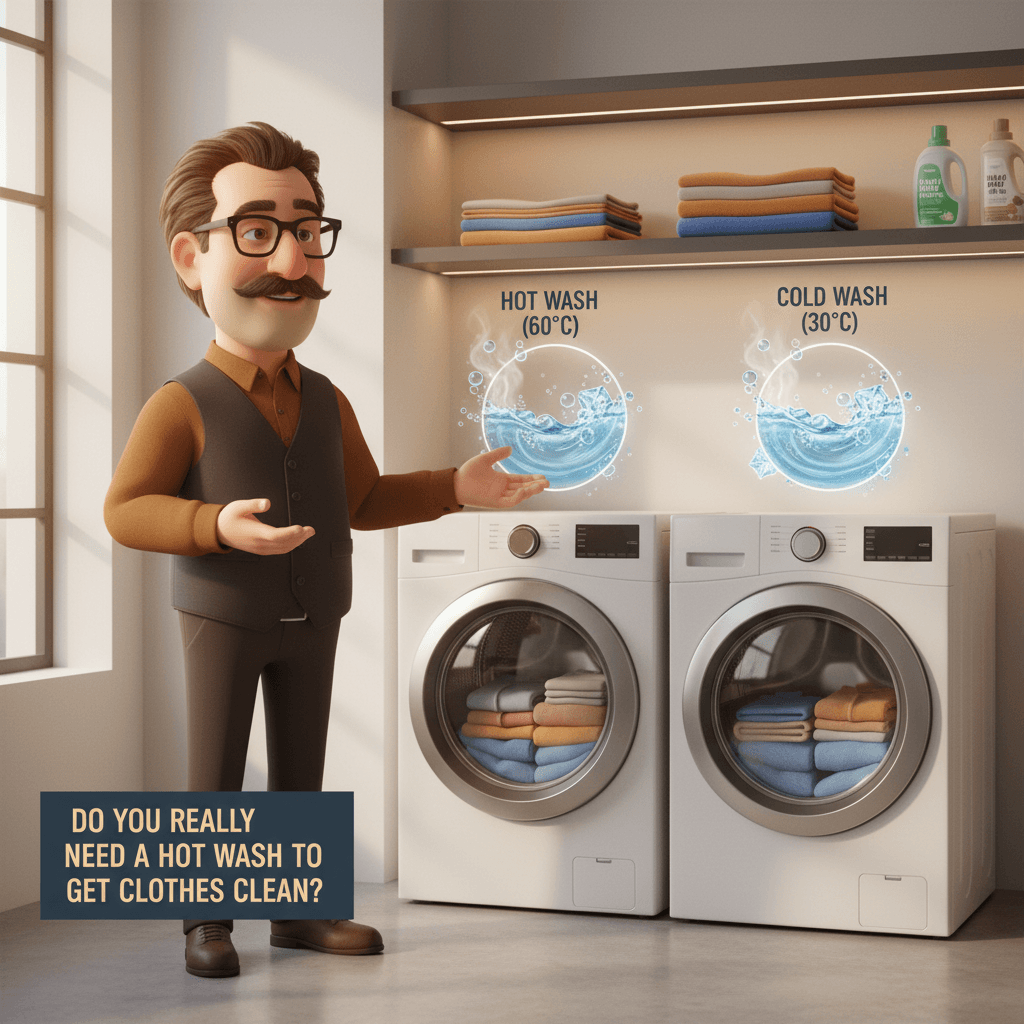
The biggest shift, however, is environmental. We have all become much more conscious of our energy bills and the planet. Most of us wash at 30°C or 40°C. I’d wager the vast majority of your loads are done at these "cool" temperatures.
At 30°C or 40°C, the chemical reaction that creates limescale is negligible. The water simply isn't hot enough to force the calcium to crystallise onto your heating element in any meaningful way. Unless you are running a hospital laundry service or still boiling nappies daily, your heating element isn't under the same thermal stress that the adverts warned us about.
The Geography of It All
Before we go putting the wallet away completely, we need to talk about where you live. The UK is a bit of a geological patchwork quilt.
If you live in Scotland, Wales, the South West, or parts of the North, you likely have soft water. Nature has already done the work for you. If you are buying water softening tablets in Glasgow or Cornwall, stop immediately! You are softening water that is already soft. It’s literally pouring money down the drain.
However, about 60% of the UK—mostly the South East, London, and East Anglia—has hard or very hard water. This is where the concern lies. But even here, the "Calgon in every wash" rule is shaky at best.
The Great British "Which?" Verdict
I’m not just spinning a yarn here; the clever folks at the consumer association Which? have looked into this extensively. Their independent testing found that for the average household, water softener tablets are largely an unnecessary expense.
They found that modern detergents, when used at the correct dosage for hard water, are more than capable of protecting the machine. They also noted that while limescale is a nuisance, it is rarely the thing that actually kills a modern washing machine.
Ask any repair technician—I've chatted with plenty—and they’ll tell you the same story. Machines today die from worn-out carbon brushes, fried printed circuit boards (PCBs), or mouldy bearings. The heating element failing due to scale? It happens, but it’s way down the list of causes of death. It’s a bit like worrying about a meteor strike when you should be looking both ways before crossing the road.
Let’s Talk Brass Tacks: The Economics
I love a good spreadsheet, so let’s crunch the numbers. This is where the argument really falls apart for me.
Let’s say you are a diligent soul and you use a branded water softener tablet in every single wash. A pack doesn't come cheap. Depending on where you shop, you could be spending anywhere between £60 and £100 a year on these tablets.
The average lifespan of a modern washing machine is roughly seven years.
- Maths: £80/year x 7 years = £560.
That is a staggering amount of money. You could buy a brand-new, high-spec washing machine for £560! In fact, you could buy a very decent mid-range machine for £350 and have enough left over for a weekend away.
Now, look at the cost of the repair. If, by some chance, your heating element does scale up and fail after five years, a replacement part costs about £30 to £50. Even with labour, it’s cheaper to fix the break than to pay for the "insurance" of tablets for a decade.
Economically, it just doesn't stack up. You are paying for a new machine in instalments to prevent a £40 part from breaking.
Common Misconceptions (and What You SHOULD Do)
So, if we ditch the tablets, are we off the hook? Not quite. There are still a few myths to bust.
Myth: "Water softeners clean the machine." No, they don't. They stop scale forming, but they don't remove the sludge, hair, and soap scum that builds up in the pipes and door seal. If your machine smells like a damp pond, Calgon won't fix that. You need a service wash with a dedicated cleaner or soda crystals.
Myth: "I'll just use vinegar in every wash, it's cheaper." Careful there! While vinegar is great on fish and chips and brilliant for descaling a kettle, using it in every laundry load is risky. It’s an acid. Over time, it can attack the rubber seals and hoses inside your machine, leading to leaks. Once in a blue moon is fine; every day is a recipe for a flooded floor.
Myth: "I can use soft water dosage in a hard water area if I add a tablet." This is the one scenario where the tablets work, but it’s a false economy. People buy cheap detergent, use a tiny amount, and add a generic softener tablet. It’s usually cheaper and more effective to just use the correct "Hard Water" dose of a quality detergent.
Tod’s Verdict: The Smart Way to Wash
So, do you really need Calgon in every wash? No.
For 99% of us, it is a legacy habit from a bygone era of boiling nappies and primitive soap powders.
Here is my definitive advice for keeping your machine happy without breaking the bank:
- Check the Box: Look at the back of your detergent box. It will have dosage instructions for "Hard Water." If you live in London or the South East, use that amount. It has enough softeners built-in to protect your kit.
- Keep it Cool: Stick to 30°C or 40°C for daily washes. Your clothes will last longer, your energy bill will drop, and limescale won't stand a chance.
- The Monthly Maintenance: Instead of a daily tablet, run a monthly service wash. Put the machine on its hottest setting (90°C) with no clothes in it. Add some soda crystals or a dedicated machine cleaner. This flushes out the bacteria and mould that actually kill machines.
- Save the Cash: Take that £80 a year you would have spent on tablets and put it in a jar. If your machine breaks in 7 years, buy a shiny new one. If it doesn't, well, that’s a lot of biscuits.
Of course, if your machine is already making noises like a bag of spanners, or if you've decided it’s finally time to upgrade to something more energy-efficient, pop over to tod.ai. I’m always here to help you filter through the noise and find the perfect tech for your home.
Cheers to smarter washing!
Related reading: